Evaluating Tropical Illustrations of Flowers and Leaves for Design Projects
Selecting the right visual assets is a critical step in any creative project, particularly when aiming to capture a specific aesthetic like summer vibrancy or resort elegance. The collection known as Tropical Illustrations of Flowers, Leaves, and Lifestyle Elements offers a comprehensive suite of graphics designed for versatility. For designers, marketers, and crafters evaluating this asset pack, understanding its specific composition, technical specifications, and practical applications is essential before integration into a workflow. This evaluation explores whether this particular collection aligns with professional design needs, commercial printing requirements, and thematic consistency.
Defining the Asset Collection
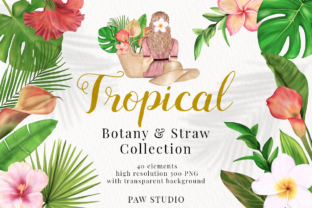
At its core, this resource is a hybrid digital art package that combines botanical accuracy with lifestyle illustration. Unlike generic stock photo libraries or simple vector icon sets, this collection focuses on a cohesive narrative style. It features colorful exotic flowers and detailed foliage paired with human elements, specifically illustrations of sitting girls with both straight and curly hair. These figures are accessorized with thematic props including straw hats, straw bags, and sunglasses.
The inclusion of human subjects distinguishes this pack from standard floral clip art. It transitions the assets from mere background textures to focal points suitable for storytelling. The "sitting back" pose suggests relaxation and leisure, making the imagery contextually appropriate for travel, wellness, and summer-themed projects. When evaluating this collection, it is important to recognize it as a curated set rather than an infinite library; it provides 40 distinct high-resolution PNG files alongside editable source formats, offering a finite but focused range of visual options.
Technical Specifications and Workflow Integration
For professional use, file format and resolution are often more important than the visual style itself. This collection addresses technical rigor through three distinct file types, each serving a different stage of the design process.
- 40 High-Resolution PNG Files: These are rendered at 300 DPI with transparent backgrounds. This specification is the industry standard for print production. The transparency allows for seamless layering over colored backgrounds, patterns, or photographs without the need for manual masking. For users working in Canva, Procreate, or non-vector software, these are likely the primary files of use.
- 4 EPS Vector Files: Encapsulated PostScript files ensure infinite scalability. If a project requires a billboard-sized banner or intricate packaging where edges must remain crisp at any zoom level, the vector components are necessary. These files also allow for color manipulation, enabling designers to adjust the hue of flowers or clothing to match specific brand palettes.
- 4 Layered PSD Files: Perhaps the most significant utility for complex compositions, the Photoshop files include separated layers for accessories like straw bags, hats, and sunglasses. This modularity allows designers to mix and match elements, change outfits, or adjust compositions without redrawing assets from scratch.
Evaluators should note that while 40 PNGs provide variety, the editable master files are consolidated into four sets. This implies that while you have many raster variations, deep customization relies on navigating these four primary source documents.
Ideal Use Cases and Applications
Determining if this collection is a strong fit requires matching its aesthetic strengths to specific project goals. The blend of botanical and lifestyle elements makes it particularly effective for industries centered around leisure and celebration.
Apparel and Textile Design
The 300 DPI resolution and transparent backgrounds make these illustrations immediately viable for Direct-to-Garment (DTG) printing, screen printing, and sublimation. The sitting poses work well on the back of t-shirts or as central motifs on tote bags. The inclusion of diverse hair textures (straight and curly) adds inclusivity to fashion lines, allowing brands to appeal to a broader demographic without sourcing multiple disparate asset packs.
Wedding and Event Stationery
Tropical themes are perennial favorites for destination weddings. However, many tropical assets lean towards cartoonish or overly bright aesthetics. This collection’s focus on "exotic flowers" and natural straw textures lends itself to more sophisticated, bohemian, or rustic-tropical invitations. The layered PSD elements allow stationers to create custom monograms framed by foliage or to place illustrated figures interacting with text layouts.
Packaging and Product Labeling
For products like sunscreen, beachwear, or organic cosmetics, the combination of nature and human enjoyment creates an emotional connection. The straw bag and hat illustrations serve as excellent secondary graphics for packaging sides or thank-you cards included in e-commerce shipments.
Tradeoffs and Considerations
No single asset pack solves every design challenge. A balanced evaluation must consider potential limitations alongside benefits.
Style Consistency vs. Flexibility: The hand-drawn, illustrative style is cohesive, which is a benefit for branding but a limitation for mixed-media projects. If your existing brand identity relies on minimalist line art or photorealism, these lush, colorful illustrations may clash. They demand a design environment that supports organic, textured visuals.
Editability Requirements: While PNGs are accessible to everyone, maximizing the value of the EPS and PSD files requires proficiency in Adobe Illustrator and Photoshop. Users relying solely on basic mobile editing apps may only utilize 50% of the package's potential. If you cannot edit vectors or manipulate layers, the higher price point often associated with such comprehensive bundles may not be justified compared to simpler raster-only alternatives.
Cultural and Seasonal Relevance: Tropical imagery is inherently seasonal in many markets. Evaluators should consider the longevity of the asset. While perfect for Spring/Summer collections or evergreen resort marketing, these illustrations may feel out of place in autumn/winter campaigns unless specifically recontextualized as "escape" or "travel" content.
When to Consider Alternatives
While Tropical Illustrations of Flowers, Leaves, and Lifestyle Elements is robust, it is not the universal solution. Alternatives may be preferable in the following scenarios:
- Need for Photorealism: If the project requires authentic photography rather than interpretation, stock photo subscriptions or AI-generated photorealistic models would be superior choices.
- Minimalist Corporate Branding: For tech, finance, or medical sectors where clean geometry and abstraction communicate trust, hand-drawn tropical florals may appear too informal or decorative.
- Highly Specific Customization: If you require a model wearing a specific branded garment or holding a proprietary product, hiring a custom illustrator or conducting a photoshoot is more efficient than trying to force generic assets to fit niche requirements.
- Budget Constraints for Single Use: If the project requires only one specific flower or a single silhouette, purchasing a full collection with 40+ elements and source files is economically inefficient. Micro-stock marketplaces offering individual elements may be more practical.
Making the Final Decision
Ultimately, the decision to acquire this tropical illustration collection should hinge on the intersection of technical capability and thematic alignment. It represents a high-value option for creators who need print-ready, versatile assets that bridge the gap between botanical art and character illustration. The provision of layered PSDs and scalable EPS files signals a product built for professional adaptation rather than passive consumption.
Before purchasing, verify that your current software ecosystem supports the provided file formats and that the artistic style complements your existing visual language. If your goal is to produce vibrant, human-centric tropical designs for print, fabric, or stationery, this collection offers a structured, high-quality foundation. However, if your needs are strictly photographic, minimalist, or hyper-specific, exploring specialized alternatives will likely yield better results. By weighing these factors objectively, designers can ensure their investment translates directly into successful creative outcomes.