Evaluating Watercolor Moroccan Tiles Clipart for Professional Design Projects
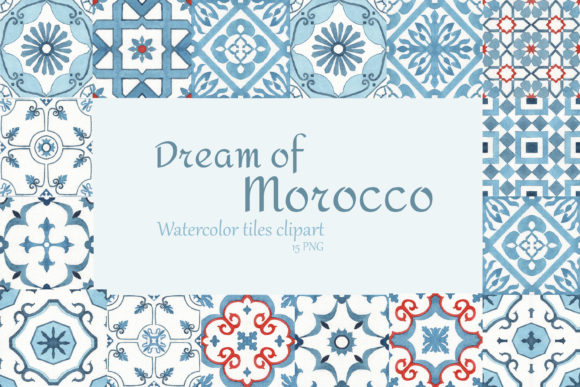
In the landscape of digital design assets, finding decorative elements that balance cultural authenticity with modern versatility is a persistent challenge. Watercolor Moroccan Tiles Clipart represents a specific niche within surface pattern design that bridges traditional Zellige aesthetics and contemporary hand-painted illustration. For designers, stationers, and content creators, this asset type offers more than mere decoration; it provides a textured, organic alternative to the sterile precision of vector graphics. When evaluating a collection of fifteen high-resolution PNG files featuring hand-painted mosaic tiles and floral ornaments, the primary considerations shift from simple visual appeal to practical application, technical reliability, and long-term utility across various media formats.
The Technical Value of Hand-Painted Raster Assets
While vector graphics are often lauded for their infinite scalability, watercolor clipart serves a different functional purpose. The value proposition of this specific collection lies in its raster nature. At 6 inches by 6 inches, these PNG files capture the granular detail of pigment absorption, paper texture, and brushstroke variation that vectors cannot authentically replicate. This resolution translates to approximately 1800 x 1800 pixels at standard print quality (300 DPI), which is a critical specification for professional output.
For print designers working on wedding invitations or menu cards, this size is optimal. It allows the tile to serve as a dominant background element on A5 or 5x7 inch stationery without pixelation, while remaining manageable in file size for digital workflows. The transparency inherent in the PNG format is equally significant. Unlike JPEGs with white backgrounds that require tedious masking, these transparent tiles allow for seamless layering over colored cardstock textures, linen overlays, or solid brand colors. This non-destructive editing capability reduces production time significantly when iterating through client revisions or adapting a single design system for multiple outputs like bridal shower signage and thank-you notes.
Practical Applications in Stationery and Event Design
The most immediate application for Watercolor Moroccan Tiles Clipart is in the event stationery sector. However, successful implementation requires understanding the distinction between generic pattern use and intentional design integration. In wedding invitations, these tiles function effectively as framing devices rather than all-over backgrounds, which can sometimes compromise text legibility. The inclusion of floral ornament variants alongside geometric mosaics provides necessary negative space, allowing typographic hierarchy to remain clear.
For menu design and table numbers, the 6x6 dimension acts as a modular unit. Designers can arrange these tiles in grids to create custom borders or use individual tiles as bullet points for list items. The hand-painted quality introduces a tactile warmth that aligns well with current trends favoring artisanal and bespoke event aesthetics. When designing for bridal showers or birthday cards, the mix of intricate mosaic work and softer floral elements allows for gender-neutral or feminine styling depending on color grading adjustments made during post-production. This flexibility extends the asset's lifespan beyond a single season or trend cycle.
Digital Media and Content Creation Utility
Beyond print, these assets demonstrate strong utility in digital environments where screen resolution requirements differ. For bloggers and social media managers, the 6-inch source files provide ample resolution for web use while maintaining crisp edges on high-density Retina displays. In blog headers or Pinterest pin designs, Moroccan tiles offer a culturally rich visual anchor that distinguishes content from minimalist or corporate alternatives.
Planner sticker design presents another viable use case. The modular nature of individual tiles allows creators to isolate specific motifs for digital planner ecosystems like GoodNotes or Notability. Because the files are pre-separated PNGs, users can drag and drop individual tiles onto digital spreads without needing advanced photo editing skills. For logo design, these clipart elements should be approached with caution; they are best used as supporting graphical accents or monogram frames rather than primary logomarks, ensuring trademark distinctiveness while retaining decorative flair.
Assessing Quality and Stylistic Consistency
When acquiring a set of fifteen files, consistency is as important as individual quality. A professional evaluation must determine whether the watercolor washes, edge softness, and color saturation remain uniform across the entire collection. Incoherent sets where some tiles appear wet-on-wet while others look dry-brushed can disrupt visual harmony in composite layouts. High-quality Watercolor Moroccan Tiles Clipart maintains a cohesive lighting direction and pigment density, suggesting the pieces were created in a single session or with strict style guidelines.
The complexity of the floral ornaments also warrants scrutiny. Effective botanical accents should complement the geometric rigidity of Moroccan mosaics without competing for attention. The best examples in this category exhibit restrained detailing that matches the opacity and bleed characteristics of the tile work. Users should test sample compositions before committing to large-scale projects, verifying that the transparent edges blend naturally against intended background colors without unwanted halos or jagged artifacts that indicate poor masking.
Workflow Integration and Licensing Considerations
Integrating raster clipart into professional workflows requires disciplined file management. While 6x6 inches is sufficient for most applications, designers should avoid upscaling these assets beyond 150% to prevent interpolation blur. For larger format printing such as banners or wall murals, these specific files may serve better as texture references or repeating pattern components rather than standalone hero images. Understanding these physical limitations prevents disappointment during final production stages.
Licensing terms dictate commercial viability. Professionals must verify whether the fifteen PNG files permit end-product creation versus resale of the raw assets. Typically, clipart of this nature supports derivative works like printed invitations or digital templates but prohibits redistribution of the unmodified source files. Clarifying these boundaries protects both the creator’s intellectual property and the user’s business operations. Additionally, maintaining organized asset libraries with clear naming conventions ensures these resources remain accessible for future projects, maximizing return on investment over time.
Audience Fit and Strategic Limitations
This collection is ideally suited for intermediate to advanced creators who possess foundational compositing skills. Beginners may find the lack of pre-arranged layouts challenging, as the individual tiles require deliberate placement to achieve balanced compositions. Conversely, expert illustrators might view clipart as restrictive compared to creating custom paintings. The sweet spot includes freelance stationers, small business owners managing their own branding, educators creating culturally relevant materials, and hobbyists seeking professional-grade embellishments without the learning curve of traditional watercolor painting.
It is important to acknowledge stylistic limitations. Moroccan tile aesthetics carry specific cultural connotations that may not suit every project brief. Designs requiring ultra-modern, corporate, or minimalist sensibilities may find these ornate, hand-painted elements visually discordant. Furthermore, watercolor as a medium inherently suggests softness and tradition; it rarely communicates technological innovation or industrial strength. Recognizing when not to use Watercolor Moroccan Tiles Clipart is as valuable as knowing when to employ it.
Long-Term Value in Creative Asset Libraries
Trends in surface design fluctuate, but certain aesthetic categories maintain enduring relevance. Moroccan geometry and botanical watercolors fall into this evergreen category, distinguishing them from fleeting viral aesthetics. Investing in high-quality executions of these themes builds a foundational asset library that yields dividends across years of creative work. The fifteen-file count suggests a curated selection rather than an overwhelming volume, encouraging thoughtful usage over indiscriminate application.
Ultimately, the decision to utilize Watercolor Moroccan Tiles Clipart should stem from project-specific needs rather than novelty. When the goal is to infuse digital or print media with organic texture, cultural resonance, and handcrafted authenticity, these assets perform reliably within their technical parameters. Success depends less on the clipart itself and more on the designer’s ability to integrate these elements with typographic discipline, color theory awareness, and respect for the medium’s inherent characteristics. By approaching these resources as professional tools rather than decorative shortcuts, creators can elevate their output while maintaining efficiency and artistic integrity.