Black and White Flowers: Strategic Visual Assets for Timeless Branding and Design
In an era of digital saturation where color trends cycle with exhausting speed, the strategic use of monochrome imagery offers a distinct competitive advantage. Black and white flowers are not merely an aesthetic choice; they are a functional design tool that communicates sophistication, permanence, and clarity. For entrepreneurs, marketers, and creators, integrating high-quality vintage floral illustrations into your visual identity serves as an anchor. Unlike trendy palettes that date a brand within months, the stark contrast of botanical line art provides a neutral yet evocative foundation that supports long-term positioning. This asset class bridges the gap between nostalgic warmth and modern minimalism, allowing for versatile application across everything from luxury packaging to scalable web interfaces.
The Strategic Value of Monochrome Botanical Assets
Choosing black and white flowers over full-color alternatives is often a decision rooted in operational efficiency and brand longevity. Color carries heavy cognitive load and cultural baggage; a specific shade of pink may signal romance to one demographic but immaturity to another. By stripping away hue, you isolate form and texture. This reduction allows the viewer to focus entirely on the composition and the message it supports rather than being distracted by chromatic trends. For businesses operating in wellness, education, publishing, or artisanal retail, this neutrality creates space for the customer’s own emotional projection.
Furthermore, monochrome assets solve significant production challenges. When designing for print media like greeting cards, gift tags, or fabric, color matching can be expensive and inconsistent. A high-resolution black and white floral illustration eliminates the risk of color drift between digital proofs and physical products. It ensures that your branding remains identical whether it is embroidered on a t-shirt, stamped on recycled paper, or displayed on a backlit mobile screen. This consistency builds trust and recognition, which are foundational elements of customer experience.
Versatility Across Digital and Physical Touchpoints
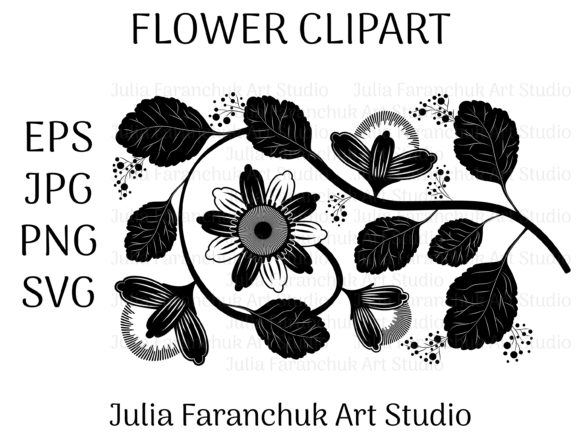
The true ROI of a comprehensive floral digital graphics package lies in its adaptability. A vertical vine structure with large flowers and decorative berry twigs is inherently modular. In web design, such an element can serve as a sidebar border, a footer accent, or a subtle watermark without competing with call-to-action buttons or body text. The transparency of PNG files allows these botanical elements to layer seamlessly over any background color or texture, making them indispensable for digital scrapbooking and social media content creation.
For physical product lines, the scalability of vector formats changes the manufacturing calculus. Because the artwork originates as clean line art, it translates perfectly to laser cutting, vinyl plotting, and screen printing. Entrepreneurs launching merchandise lines can utilize the same master file for a massive wall poster and a delicate mug wrap without losing fidelity. This reduces the need for multiple design iterations and streamlines the asset management process for small teams and freelancers who must maximize output with limited resources.
Technical Specifications as Business Enablers
Understanding file formats is not just a technical requirement; it is a strategic planning necessity. Selecting the wrong format leads to workflow bottlenecks and subpar results. This collection addresses those friction points by providing four distinct file types, each serving a specific operational purpose.
- EPS (Encapsulated PostScript): This is your master source file for Adobe Illustrator and Photoshop. It is essential for professional designers who need to manipulate individual nodes, adjust stroke weights, or separate elements for complex compositing. Owning the EPS ensures you are never locked out of editing your own branding assets.
- SVG (Scalable Vector Graphics): Critical for the maker economy and responsive web design. SVGs are code-based vectors that remain crisp at any zoom level. For users of Cricut, Silhouette Designer Edition, Inkscape, or Corel Draw, this format enables precise cutting and crafting. On websites, SVGs reduce load times compared to raster images while maintaining perfect sharpness on retina displays.
- PNG (Portable Network Graphics): Provided at 5333 x 8000 pixels with a transparent background, this file is optimized for immediate use in non-vector environments. It is the workhorse for Canva users, presentation designers, and anyone needing high-quality clipart without a white box around the edges. The high resolution ensures it holds up in print layouts up to poster size.
- JPG (Joint Photographic Experts Group): Also at 5333 x 8000 pixels, this flattened image is best for archival purposes, quick mockups, or platforms that do not support transparency. While less flexible than vectors, having a high-res raster version ensures compatibility with legacy software and basic photo editors.
Intentional Application in Brand Identity
Possessing high-quality assets does not guarantee effective communication. The risk with ornate vintage illustrations is visual clutter. To use black and white flowers intentionally, you must treat them as structural elements rather than mere decoration. Consider the hierarchy of information. If the floral vine is dense, pair it with ample negative space and simple sans-serif typography. If the goal is to evoke heritage or botany, allow the illustration to dominate and use text sparingly.
Context dictates execution. For a children’s clothing line, the intricate details of the berries and twigs add a sense of whimsy and craftsmanship that appeals to parents seeking quality. Conversely, for a corporate sustainability report, the same botanical accuracy signals scientific rigor and attention to detail. Before deploying these assets, define the emotional outcome you seek. Are you aiming for softness and nostalgia, or precision and elegance? The answer determines the scale, opacity, and placement of the floral elements.
Mitigating Risks in Visual Communication
While monochrome florals are versatile, they are not universally appropriate. A common pitfall is using vintage aesthetics in contexts that require futuristic or high-tech signaling. If your value proposition relies on cutting-edge innovation, antique botanical styles may create cognitive dissonance. Always audit your visual choices against your core brand attributes. Additionally, avoid overusing detailed illustrations in small-scale applications like favicons or mobile app icons; the complexity will turn to noise when reduced. Reserve these assets for mediums where their detail can be appreciated.
Another consideration is licensing and originality. Because digital downloads are accessible, there is a possibility of seeing similar motifs elsewhere. Mitigate this by customizing the asset. Use the EPS or SVG file to alter the arrangement, combine multiple vines, or integrate the flowers with proprietary geometric shapes. Customization transforms a stock asset into a unique brand signature. This extra step in the planning phase protects your visual identity and enhances the perceived value of your final product.
Optimizing Workflow for Creators and Educators
For educators and content creators, time is the most scarce resource. High-resolution, pre-formatted botanical illustrations accelerate production cycles. Instead of spending hours drawing a realistic branch or struggling with AI generation inconsistencies, you can drop a verified, anatomically accurate floral PNG directly into a worksheet, slide deck, or blog header. This reliability supports consistent content output, which is crucial for audience retention and SEO performance.
When planning a project series, establish a style guide for how these flowers are used. Define standard margins, acceptable color overlays (if tinting the black and white base), and pairing rules for photography. Having these protocols in place prevents decision fatigue during execution. It ensures that whether you are creating a gift tag today or a website banner next month, the visual language remains coherent. This systematic approach to creativity turns artistic assets into reliable business infrastructure.
Long-Term Value and Audience Connection
The appeal of black and white flowers transcends age demographics, resonating with both younger audiences attracted to cottagecore and vintage revival, and older demographics who appreciate classic botanical art. This broad resonance makes these assets a safe investment for brands targeting multi-generational markets. Unlike niche trends that alienate segments of your audience, nature-inspired monochrome art is culturally agnostic and enduring.
Ultimately, the decision to utilize vintage floral illustrations should be viewed through the lens of asset accumulation. You are not just buying a picture; you are acquiring a flexible design system. The combination of vector editability and high-resolution raster availability ensures that this single purchase can serve dozens of future projects. For lovers of botany, nature, and vintage style, these visuals provide an authentic connection point. For business owners and marketers, they provide a stable, elegant, and highly functional tool for building a recognizable and respected brand presence. By prioritizing quality, versatility, and intentional application, black and white flowers become more than decoration—they become a cornerstone of your visual strategy.