Gold and White Hand Drawn Flower Elements: Integrating Organic Assets into Professional Design Workflows
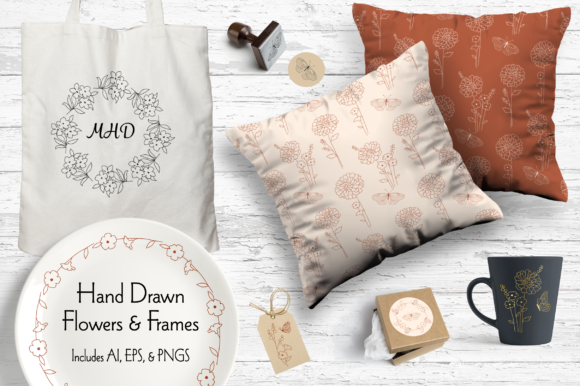
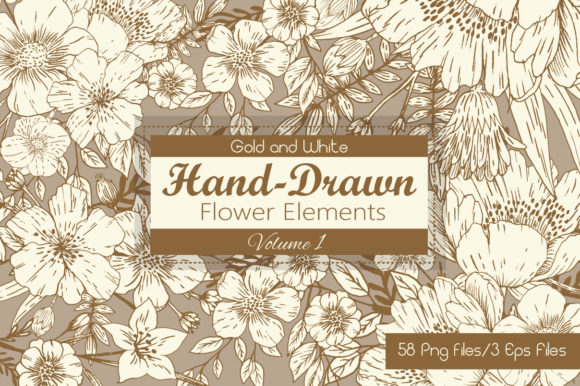
In the landscape of digital design and content creation, the balance between efficiency and authenticity is a constant challenge. Professionals across marketing, publishing, and event planning often struggle to find assets that feel bespoke without requiring hours of custom illustration. The Gold and White Hand Drawn Flower Elements collection addresses this specific friction point by providing high-fidelity, pre-digitized organic assets that integrate seamlessly into modern production pipelines. This resource is not merely a clip-art pack; it is a modular design system comprising 7 flower arrangements, 50 individual flower elements, and 1 comprehensive flower wreath. With 58 PNG files for immediate raster use and 3 EPS files for vector scalability, this set bridges the gap between traditional artistry and digital utility.
Understanding where these assets fit within a broader creative process is essential for maximizing their value. They serve as foundational building blocks during the conceptualization phase, execution tools during the design phase, and refinement assets during post-production. Whether you are a freelance graphic designer managing multiple client brands or a small business owner creating in-house marketing materials, the hand-drawn nature of these elements introduces a tactile quality that purely digital vectors often lack. The gold and white color palette specifically targets luxury, elegance, and minimalism, making it a strategic choice for projects requiring a sophisticated aesthetic without visual clutter.
Strategic Application Across Project Lifecycles
The utility of this floral set extends beyond simple decoration. It functions as a versatile component at various stages of project development. During the initial planning and mood-boarding phase, the 7 pre-made flower arrangements allow creators to quickly visualize themes and establish a tonal direction. Instead of spending billable hours sketching rough concepts, designers can drag and drop these arrangements to test composition and hierarchy. This rapid prototyping capability accelerates client approval cycles and reduces time-to-market for seasonal campaigns.
During the active execution phase, the 50 individual flower elements become critical for customization. Unlike static stock photos, these isolated components allow for non-destructive editing. A web designer might use three distinct elements to create a unique header background, while a print publisher uses the same elements to frame chapter titles. The separation of assets means you are never locked into a single configuration. This modularity supports iterative design workflows where feedback requires subtle adjustments rather than complete overhauls. For educators and course creators, these elements provide a consistent visual language across slide decks, worksheets, and certificates, reinforcing brand identity through repetition and variation.
In post-production and repurposing workflows, the EPS vector files ensure longevity. As deliverables shift from social media graphics to large-format banners or merchandise, resolution becomes a limiting factor. The inclusion of vector source files means these hand-drawn elements can be scaled infinitely or recolored to match new brand guidelines without losing the integrity of the original brushwork. This future-proofs the asset library, transforming a one-time purchase into a long-term resource that adapts to evolving business needs.
Technical Integration and Software Compatibility
Successful implementation depends on understanding how these files interact with existing software ecosystems. The dual-format delivery (PNG and EPS) ensures compatibility across the entire Adobe Creative Cloud suite, Affinity products, Canva, and Procreate. For users working in raster-based environments like Photoshop or Procreate, the transparent PNGs offer instant layering capabilities. The transparency is clean and precise, eliminating the tedious masking work often associated with scanned textures. This technical readiness is crucial for maintaining workflow velocity when deadlines are tight.
For vector-centric workflows in Illustrator or CorelDRAW, the EPS files provide editable paths. This allows professionals to alter stroke weights, adjust anchor points, or apply gradient fills directly to the hand-drawn lines. This level of control is rare in digitized hand-drawn assets, which are often flattened images masquerading as vectors. True vector editability means the Gold and White Hand Drawn Flower Elements can be adapted to fit specific layout constraints or merged with other vector illustrations to create hybrid compositions. When integrating with web design platforms like WordPress or Webflow, optimizing the PNGs for web performance is necessary. While the source files are high-resolution, exporting compressed versions for digital display ensures fast load times without sacrificing visual impact.
File Organization and Asset Management
With 58 individual PNG files and 3 EPS masters, proper organization is a prerequisite for efficiency. Adopting a systematic naming convention upon download prevents workflow bottlenecks later. Rather than relying on generic filenames, consider renaming assets based on function or visual characteristic, such as "gold-accent-leaf-small.png" or "white-peony-arrangement-left.eps." Integrating these files into cloud storage solutions like Dropbox or Adobe Creative Cloud Libraries enables team-wide access and version control. For agencies, creating a shared library ensures that all designers utilize the same asset versions, maintaining consistency across diverse client projects.
- Categorization: Group files by type (arrangements vs. singles) or color dominance to speed up search times.
- Metadata Tagging: Add keywords to file properties to make assets searchable within digital asset management systems.
- Template Creation: Build master templates in InDesign or PowerPoint with pre-placed floral elements to standardize recurring deliverables.
- Backup Protocols: Maintain an unaltered master copy of the original zip file to prevent accidental loss or corruption during editing.
Practical Implementation for Diverse Use Cases
The application of these elements varies significantly depending on the user's role and objective. For wedding planners and stationers, the gold and white palette aligns perfectly with formal invitation suites. The hand-drawn texture adds a layer of perceived value that digital fonts alone cannot achieve. By combining the wreath element with typography, designers can create cohesive branding packages that extend from save-the-dates to table numbers. The ability to edit the EPS files allows for color matching to specific Pantone swatches used in foil stamping or letterpress printing, ensuring physical outputs match digital proofs.
Content marketers and bloggers can leverage these elements to break up text-heavy articles and improve engagement metrics. Strategic placement of floral dividers or marginalia guides the reader’s eye and creates natural pause points. However, restraint is key; the minimalist nature of the gold and white scheme works best when used as negative space enhancers rather than overwhelming backgrounds. For product packaging designers, these elements serve as premium accents on labels and boxes. The vector files allow for seamless wrapping around curved surfaces or die-cut shapes, while the hand-drawn aesthetic communicates artisanal quality to consumers.
Educators and instructional designers face the unique challenge of making materials engaging without being distracting. These floral elements provide a mature, professional alternative to cartoonish clip art often found in educational resources. They can be used to denote sections, highlight key takeaways, or simply add warmth to sterile documents. Because the files are easily altered, instructors can adjust opacity or size to ensure text remains legible against decorative backgrounds. This adaptability makes the set suitable for everything from kindergarten newsletters to corporate training manuals.
Quality Control and Consistency Standards
Maintaining visual consistency when using hand-drawn assets requires deliberate attention to detail. Because each element was drawn individually, variations in line weight and texture are inherent features, not flaws. However, when combining multiple elements into a new composite arrangement, designers must ensure these variations harmonize rather than clash. Regular zoom checks at 100% magnification help verify that edges remain crisp and that gold tones remain consistent across different elements. Lighting direction should also be considered; even in flat illustration, implied light sources affect how elements sit together in a composition.
Color management is another critical quality control factor. Gold is notoriously difficult to reproduce consistently across screens and print media. The digital RGB gold in the PNG files may appear vibrant on backlit displays but dull in CMYK print. Professionals should always convert EPS files to the appropriate color profile before finalizing print projects and request physical proofs when possible. For digital-only projects, testing assets on multiple devices ensures the gold retains its luster without shifting toward yellow or brown. Establishing internal style guides for how these floral elements are used—defining acceptable sizes, placements, and combinations—helps teams maintain brand coherence over time.
Enhancing Creative Efficiency Through Modular Design
Ultimately, the value of the Gold and White Hand Drawn Flower Elements lies in its capacity to streamline creative production without compromising artistic integrity. By treating these assets as modular components rather than fixed decorations, users unlock exponential creative possibilities. A single wreath can be deconstructed into corner accents; individual blooms can be clustered to form new arrangements; vector paths can be modified to create entirely new botanical species. This flexibility transforms a static asset pack into a dynamic design toolkit.
For entrepreneurs and freelancers operating under resource constraints, this efficiency translates directly to profitability. Time saved on custom illustration is time available for strategy, client communication, or additional projects. The professional quality of hand-drawn elements elevates perceived value, allowing creators to command higher rates or attract premium clients. By integrating these assets thoughtfully into established workflows, users achieve the elusive combination of speed, quality, and authenticity that defines successful modern design practice. The result is not just a beautiful image, but a sustainable, scalable approach to visual communication that serves both immediate project needs and long-term creative growth.