Evaluating Vintage Flowers Clipart for Creative and Commercial Projects
When selecting visual assets for design projects, the distinction between generic floral imagery and specialized vintage flowers clipart often determines the final aesthetic quality. This specific category of digital art is defined not merely by the subject matter but by a deliberate adherence to retro color palettes, botanical accuracy, and structural continuity. Unlike modern flat illustrations or hyper-realistic photography, vintage floral assets utilize a limited spectrum—often anchored by beige, muted greens, and soft blacks—to evoke a sense of history and timelessness. For designers, crafters, and small business owners aged 20 to 50, understanding the technical and stylistic nuances of these assets is essential for making informed purchasing decisions.
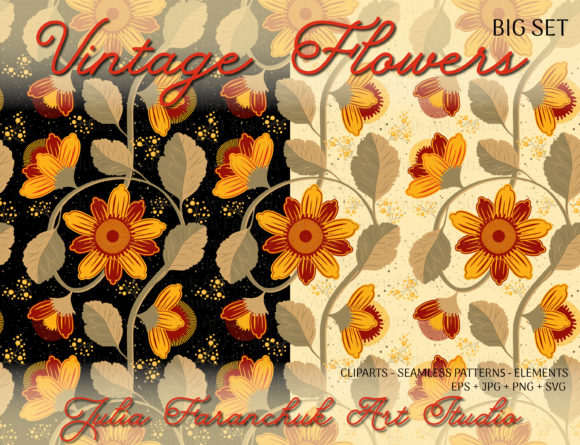
The primary differentiator of high-quality vintage flowers clipart is the composition. Rather than isolated, static bouquets, premium kits often feature plants forming a continuous vertical vine. This structural choice offers superior versatility for applications requiring flow, such as website sidebars, greeting card borders, or fabric printing. When evaluating options, it is crucial to look beyond the preview image and assess the underlying file architecture. A comprehensive kit should provide more than just a single JPEG; it must offer a modular ecosystem including EPS vectors for scalability, high-resolution PNGs for layering, and SVG files for cutting machines. This multi-format approach ensures the asset remains functional across diverse mediums, from digital web design to physical textile printing.
Comparing Vintage Styles Against Modern Floral Alternatives
Designers frequently weigh vintage botanical assets against contemporary floral trends. While modern florals often prioritize bold saturation and simplified shapes suitable for quick social media graphics, vintage flowers clipart serves a different strategic purpose. The limited retro color palette inherent in vintage designs reduces visual noise, making it easier to integrate text without sacrificing readability. This makes vintage options particularly strong for stationery, wedding invitations, and branding where elegance and legibility are paramount.
However, there are tradeoffs to consider. Vintage styles can sometimes appear too subdued for high-impact retail packaging or youth-oriented marketing unless carefully balanced with modern typography. If your project requires immediate visual arrest from a distance, such as a trade show banner, the subtle beige and black tones of a retro pattern may underperform compared to high-contrast alternatives. Conversely, for projects targeting audiences who value nostalgia, botany, nature, and artisanal craftsmanship, the understated complexity of vintage vines creates an emotional resonance that bright, modern vectors cannot replicate. The decision ultimately hinges on whether the goal is instant attention or sustained engagement.
Technical Specifications and Format Versatility
A common point of failure in digital asset acquisition is receiving files that are visually appealing but technically insufficient for production. When researching vintage flowers clipart, verify that the resolution meets professional print standards. High-quality kits typically offer JPG and PNG files with a minimum dimension of 5333 pixels. This resolution threshold is critical for printing on t-shirts, mugs, fabric, and large-format posters without pixelation. Assets below this size may suffice for web use but will degrade significantly when scaled for physical merchandise.
Vector compatibility is another non-negotiable factor for professional adaptability. The inclusion of EPS files allows users to modify colors, scale elements infinitely, and separate layers in Adobe Illustrator or Photoshop. This is distinct from raster-only packs, which lock the user into the original artist’s color choices and dimensions. Furthermore, for the growing demographic of crafters using Cricut or Silhouette machines, dedicated SVG files for individual figures and branches are essential. These cut-ready files differ from standard vector art; they must have optimized nodes and closed paths to prevent machine errors. A kit lacking specific cutter support forces users to manually trace or convert files, introducing quality loss and additional labor.
Seamless Patterns vs. Individual Elements: Choosing the Right Asset Type
Vintage floral collections generally fall into two functional categories: seamless patterns and individual compositional elements. Understanding when to use each is vital for efficient workflow. Seamless patterns, particularly those available in both beige and black background variations, are engineered for repetition. They are the optimal choice for scrapbooking paper, wallpaper, fabric yardage, and website backgrounds. When evaluating pattern files, look for packages that include both single-tile and four-tile JPG previews. The four-tile preview is a diagnostic tool; it reveals how the repeat interacts at larger scales and helps identify unintended visual stripes or clustering before committing to a print run.
In contrast, individual elements on transparent backgrounds serve as building blocks for custom compositions. These are necessary for creating logos, vignettes, gift tags, and unique poster layouts. While a seamless pattern provides coverage, individual clipart provides focal points. The most versatile kits bridge this gap by offering both. For example, a branch with flowers on a beige background serves as a ready-to-use accent for vintage-themed documents, while the same branch on a transparent PNG background allows for integration into complex digital collages. Users focused solely on surface design may prioritize pattern variety, whereas those engaged in brand identity or mixed-media art should prioritize the quantity and diversity of isolated elements.
Application-Specific Considerations for Print and Digital
The intended end-use heavily influences which vintage flowers clipart kit is appropriate. For digital applications like web design and social media, file size and transparency are the primary concerns. High-resolution PNGs with transparent backgrounds allow for non-destructive layering over colored sections or photographs. In this context, the "limited retro color palette" acts as a unifying filter, helping disparate design elements cohere visually without extensive color grading.
For physical products, the substrate dictates the requirement. Printing on fabric and paper scrapbooking supplies demands seamless repeats and high DPI. However, printing on rigid souvenirs like mugs or tags often benefits more from individual branches and floral clusters. It is also important to consider the audience demographics. Designs featuring delicate vertical vines and botanical accuracy tend to resonate strongly with women and children, as well as enthusiasts of cottagecore, dark academia, and traditional botany. If your target market aligns with these aesthetics, the investment in specialized vintage assets yields higher returns than generic floral stock. Always verify licensing terms for commercial use on merchandise, as personal-use licenses are common in the vintage clipart space and insufficient for business applications.
Evaluating Quality Indicators in Digital Downloads
Not all vintage-style assets are created equal. When comparing options, scrutinize the artistic integrity alongside technical specs. True vintage flowers clipart should exhibit hand-drawn characteristics or faithful digitization of historical plates, rather than algorithmic generation. Look for organic imperfections in the line work and natural color bleeding that mimics aged ink or watercolor. Overly symmetrical or neon-colored "vintage" claims often indicate low-effort AI generation or poor recoloring of modern assets, which can undermine the authenticity sought by discerning customers.
Additionally, assess the organization of the download. Instant digital downloads should be logically structured. Separate folders for vectors, rasters, patterns, and cut files streamline the creative process. A disorganized zip file containing hundreds of unnamed images adds friction to every project. Professional-grade kits also provide color swatches or hex codes corresponding to their retro palette, facilitating accurate matching across different software and print vendors. This level of foresight in product delivery often correlates with higher quality in the artwork itself.
Making the Final Selection Decision
Choosing the right vintage flowers clipart requires balancing aesthetic preference with practical necessity. If you require maximum flexibility for logo creation and custom layout, prioritize kits with extensive transparent PNG libraries and editable EPS vectors. If your focus is textile design or scrapbooking, seamless patterns with verified tile alignment take precedence. For crafters utilizing cutting machines, native SVG support is the deciding factor.
Ultimately, the best resource is one that aligns with your specific production pipeline. A kit featuring a continuous vertical vine on a beige background offers a distinct advantage for border-heavy designs, while individual elements support modular creativity. By focusing on resolution benchmarks (5333px+), format diversity (EPS/SVG/PNG/JPG), and authentic stylistic execution, buyers can avoid the common pitfalls of digital asset acquisition. Whether for personal expression or commercial product development, investing in structurally sound and aesthetically coherent vintage florals ensures the final output possesses both beauty and professional viability.