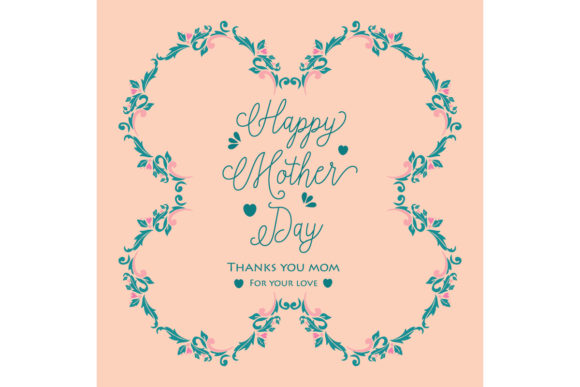
Evaluating Template Design for Happy Mother Day
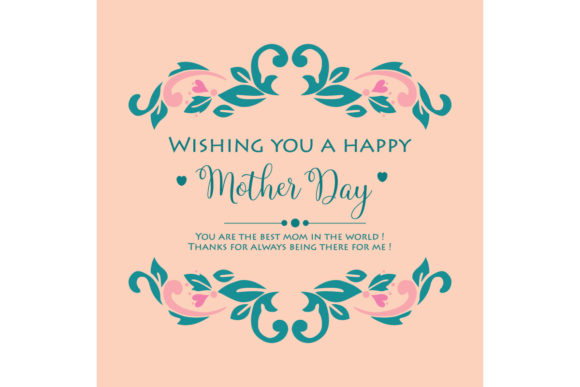
Selecting the appropriate visual framework for Mother’s Day requires balancing aesthetic appeal with functional communication. A template design for Happy Mother Day serves as a pre-structured layout that integrates typography, color palettes, and graphical elements into a cohesive unit. When specifically evaluating designs featuring elegant floral and leaf frames in vector illustration format, the decision-making process involves assessing technical scalability, stylistic relevance, and customization potential. These templates are not merely decorative backgrounds; they are strategic tools intended to convey sentiment efficiently while maintaining professional or personal standards of quality.
Defining the Elegant Floral Vector Template
In the context of digital and print design, a template design for Happy Mother Day utilizing vector illustrations differs significantly from raster-based alternatives. Vector graphics are composed of mathematical paths rather than pixels, allowing for infinite scaling without loss of resolution. An elegant style floral and leaf frame typically features organic lines, botanical accuracy, and sophisticated color grading. This specific aesthetic is chosen for its association with growth, nurturing, and timeless beauty. When evaluating these assets, it is important to distinguish between generic clip art and curated vector templates that offer layered organization, editable anchor points, and harmonious negative space for text placement.
Primary Motivations for Adoption
Individuals and organizations typically seek out these specific templates to solve distinct problems related to time management and visual consistency. The primary driver is often efficiency. Creating a custom botanical illustration from scratch requires significant artistic skill and hours of labor. A high-quality template provides immediate access to professional-grade artwork. Secondly, there is the factor of thematic alignment. Floral motifs are culturally entrenched in Mother’s Day celebrations, making them a safe and universally understood visual language. Finally, the vector format addresses future-proofing concerns. Users recognize that a design created today may need to be resized tomorrow for a social media story, a printed invitation card, or a large-format banner, and vectors accommodate these shifts seamlessly.
Benefits of Vector-Based Floral Frames
- Resolution Independence: Whether printing a 5x7 invitation card or a web graphic, the crispness of the leaf and petal details remains intact.
- Editability: Unlike flattened images, vector templates allow users to modify individual elements. Colors can be adjusted to match brand guidelines or personal preferences, and frame density can be increased or decreased.
- File Size Efficiency: Complex floral illustrations in vector format often have smaller file sizes compared to high-resolution photographs, facilitating easier sharing and faster web loading times.
- Professional Aesthetic: Well-crafted vector art avoids the amateurish appearance sometimes associated with free stock photos, lending credibility to event invitations and greeting cards.
Tradeoffs and Limitations
Despite their advantages, template designs present specific tradeoffs that must be weighed during evaluation. The most significant limitation is software dependency. Editing true vector files typically requires specialized software such as Adobe Illustrator, Affinity Designer, or CorelDRAW. Users lacking access to these tools or the skills to operate them may find the "editable" nature of the template inaccessible. Additionally, there is the risk of ubiquity. Popular templates may appear across multiple platforms, potentially diminishing the perceived uniqueness of a personal message or exclusive event. Finally, the elegant floral style, while classic, may not align with modern, minimalist, or avant-garde branding efforts, limiting its versatility outside traditional contexts.
Situational Fit: When This Template Style Succeeds
A template design for Happy Mother Day featuring elegant floral vectors is particularly strong for formal and semi-formal applications. For printed invitation cards, the precision of vector lines ensures that fine details like stamen veins and leaf serrations reproduce sharply on paper. This style also excels in multi-channel campaigns where assets must be adapted across various dimensions without recreating artwork. Furthermore, this aesthetic is ideal for audiences that value tradition and warmth over novelty. If the goal is to evoke nostalgia, grace, and natural beauty, the organic structure of floral frames supports the emotional weight of the occasion better than geometric or abstract alternatives.
When to Consider Alternatives
Evaluation should also include recognizing when this specific template type is a poor fit. If the end-use is strictly digital at fixed dimensions (e.g., an Instagram post), the benefits of vector scalability are negated, and a high-quality raster template might offer more texture and painterly effects. For brands targeting a Gen Z demographic or promoting non-traditional family structures, the classic floral motif may feel outdated or exclusionary; bold typography or abstract art might resonate more effectively. Additionally, if the user lacks vector editing capabilities and cannot hire a designer to customize the file, a fully editable Canva-style raster template or a PSD file with smart objects may offer a more practical balance of customization and accessibility.
Practical Decision-Making Criteria
To determine if a specific template design for Happy Mother Day aligns with current needs, evaluators should apply the following practical checks:
- Verify File Formats: Ensure the download includes industry-standard vector formats (.AI, .EPS, or .SVG) alongside preview files. Avoid packages that only provide PNG or JPG if customization is required.
- Assess Layer Structure: Open the preview or documentation to confirm that the floral frame is separated from the background and text layers. Merged layers severely limit utility.
- Evaluate Negative Space: An elegant frame should enhance, not obscure, the message. Test whether the central open area accommodates the necessary word count for your specific invitation or greeting.
- Check Licensing Terms: Distinguish between personal use and commercial use licenses. If the template is for a business promotion or paid event, verify that the license covers this application to avoid legal complications.
- Test Color Customization: Before purchasing or committing, review sample variations to ensure the color palette is not hard-coded. True vector templates should allow global color changes with minimal effort.
Aligning Design Choice with Communication Goals
Ultimately, the selection of a template design for Happy Mother Day should be driven by the intended recipient's experience and the sender's operational constraints. The elegant floral and leaf frame vector illustration represents a middle ground between bespoke artistry and generic utility. It offers a reliable foundation for expressing appreciation through established visual codes. However, its value is contingent upon the user's ability to leverage its vector properties and the appropriateness of its traditional aesthetic for the specific relationship being honored. By objectively assessing technical requirements against emotional objectives, users can select a template that functions as both a beautiful artifact and an effective communication vehicle. The right choice facilitates connection without creating unnecessary technical friction or stylistic dissonance.