Watercolor Leopards in the Jungle: A Practical Guide to Tropical Wildlife Design
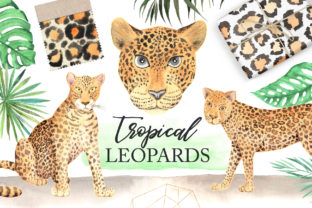
The intersection of wildlife illustration and botanical art has created a significant shift in surface pattern and stationery design. When creators explore Watercolor Leopards in the Jungle themes, they are often seeking a balance between raw animal energy and delicate floral softness. This specific aesthetic moves beyond standard safari motifs, offering a trendy tropical wildlife style that feels both organic and curated. For designers, crafters, and small business owners, utilizing a dedicated set like Watercolor Tropical Leopards provides immediate access to this niche without the steep learning curve of traditional painting or the ethical concerns of AI-generated fauna.
However, acquiring high-quality assets is only the first step. Many users inadvertently compromise their final projects by misunderstanding file specifications, mismanaging color profiles, or failing to leverage the compositional flexibility of individual elements. Understanding how to properly evaluate and apply these hand-painted resources ensures your invitations, packaging, or digital designs maintain professional integrity from screen to print.
Evaluating Authenticity and Resolution Standards
A common oversight when selecting watercolor clipart is assuming all "high resolution" claims are equal. In the context of hand-painted watercolors scanned for digital use, resolution dictates not just size, but texture fidelity. Genuine watercolor relies on paper grain, pigment bleeding, and brush stroke variation. If a file is upscaled digitally rather than scanned at source, these tactile details become blurry or pixelated.
For this collection, verifying that elements are scanned at 300dpi is non-negotiable for physical products. The leopards are provided at approximately 8x10 inches, while floral elements sit around 5x6 inches. These dimensions are optimal for standard stationery and apparel printing. A frequent mistake occurs when designers attempt to stretch an 8-inch leopard across a 24-inch poster without checking the effective PPI (pixels per inch). At 300dpi, an 8-inch image yields crisp results; stretched to 24 inches, it drops to 100dpi, resulting in visible degradation.
Better Approach: Always calculate your required print size before placing an order. If you need a leopard larger than 8x10 inches for a banner, look for sets explicitly stating higher scan dimensions or plan to use the element as part of a repeating pattern rather than a standalone focal point. The included 5000x5000px seamless patterns in this set solve this issue for large-format backgrounds, maintaining quality regardless of scale.
The Transparency Trap in Floral Compositions
Transparent PNG backgrounds are essential for layering, yet many users struggle with "halo" effects or jagged edges when placing watercolor animals over colored backgrounds. This usually happens when the original scan wasn't cleaned meticulously or when the user applies a drop shadow incorrectly in their design software. Because authentic watercolor has soft, semi-transparent edges, aggressive masking can make the animal look like a sticker rather than a painting.
This set includes 21 individual floral elements and 3 leopards with integrated florals specifically to mitigate composition issues. Instead of forcing a standalone leopard onto a busy background, utilize the pre-composed "leopard with floral elements" files. These have been masked with the watercolor bleed in mind, preserving the natural transition between pigment and paper.
- Check Edge Softness: Zoom in to 100% on the PNG before purchasing. Edges should fade naturally, not end in hard white pixels.
- Test Layering: Place the element over both dark and light backgrounds in your software to ensure no residual white artifacts remain.
- Blend Modes: Use "Multiply" or "Overlay" blend modes in Photoshop or Procreate to integrate watercolor textures seamlessly with textured paper backgrounds.
Strategic Application Across Media Types
Versatility is a key selling point for tropical wildlife sets, but different mediums require different asset strategies. What works beautifully for a digital wedding invitation may fail catastrophically on fabric. Understanding the distinction between raster clipart and seamless patterns prevents costly production errors.
Digital vs. Print Fabric Considerations
For digital projects like blog headers, social media graphics, or web banners, the individual PNG leopards offer maximum flexibility. You can resize, rotate, and combine them freely because screens do not demand perfect tiling. However, for print fabrics, packaging, and wallpaper, relying solely on scattered clipart creates visual chaos and printing gaps.
This is where the four included seamless patterns become critical. A common error is attempting to manually arrange individual flowers and leopards to create a custom repeat pattern without proper offset testing. This leads to visible grid lines or mismatched motifs when the fabric is printed. The pre-made 5000x5000px seamless JPG and PNG files eliminate this risk. They are mathematically tiled to ensure continuity across yardage.
Practical Warning: When using seamless patterns for fabric, always request a strike-off or test swatch. Screen calibration varies wildly, and tropical greens can shift toward yellow or teal depending on the textile substrate. The hand-painted nature of these originals means color variation is intentional, but you must verify it aligns with your brand palette before bulk printing.
Maximizing Creative ROI Through Modular Design
Purchasing a comprehensive set is an investment, and maximizing return requires moving beyond the obvious compositions. Beginners often use the "leopard with flowers" image exactly as presented. Professionals deconstruct and recombine. With 3 standalone leopards, 3 composite leopards, and 21 separate florals, this set functions as a modular design system.
Consider the workflow for a wedding suite. You might use the full composite leopard for the main invitation, but that same image could overwhelm a small RSVP card or envelope liner. By using the individual floral elements to create a custom border or corner accent, you maintain thematic consistency without visual heaviness. Similarly, the standalone leopards can be paired with typography for logos or monograms, while the seamless patterns serve as backing paper or box wrap.
- Audit Your Project List: Before designing, list every touchpoint (invite, tag, banner, favor box).
- Assign Asset Types: Map composites to hero pieces, individual florals to accents, and seamless patterns to coverage areas.
- Create Master Files: Build reusable templates with locked layers for the watercolor elements to speed up future iterations.
Verifying Licensing and Usage Rights
While technical quality matters, legal clarity protects your business. "Hand-painted" and "original" are significant descriptors here. In an era saturated with derivative AI content and stolen artwork, confirming that graphics are 100% original hand-painted watercolors provides security against copyright strikes. Platforms like Etsy and Amazon increasingly scrutinize listing images for AI generation or infringement.
Always review the specific license terms regarding commercial use, especially for print-on-demand (POD) products. Some licenses allow unlimited physical sales but restrict digital redistribution. Since this set emphasizes DIY and commercial applications like packaging and branding, ensure your intended use case aligns with the provider’s terms. Keeping documentation of the original purchase and license agreement is a best practice that safeguards your shop against future disputes.
Final Quality Checks Before Production
The tender, creative aesthetic of tropical jungle watercolors relies entirely on execution. Rushing from download to print is the primary cause of disappointment. Implement a mandatory proofing stage for every project.
Print a test page at actual size on your target paper stock. Check if the leopard’s spots retain definition or if they bleed into mud. Verify that the transparent backgrounds don’t leave gray boxes on colored cardstock. For digital outputs, view designs on mobile devices to ensure the intricate watercolor details remain legible at thumbnail sizes. By treating these digital assets with the same respect as traditional media, you honor the artist’s original hand-painted effort and deliver superior results to your audience. Whether creating party tags or luxury packaging, mindful application transforms simple clipart into cohesive, professional design systems.