Elevating Rustic Design with Watercolor Cotton Clipart
Achieving an authentic, organic aesthetic in digital design often presents a unique challenge. Designers and DIY enthusiasts frequently struggle to find graphics that bridge the gap between professional polish and natural imperfection. This is where high-quality Watercolor Cotton Clipart becomes an essential resource. Unlike rigid vector art or synthetic stock photography, hand-painted watercolor illustrations offer a softness and texture that instantly communicates warmth, sustainability, and artisanal care. Specifically, collections featuring spring cotton flowers and green leaves provide a versatile foundation for projects ranging from eco-friendly wedding stationery to bespoke textile patterns.
Understanding the specific utility of these assets helps creators move beyond simple decoration toward meaningful design solutions. When you utilize a dedicated set of watercolor cotton flower clipart, you are not just adding an image; you are integrating a cohesive visual language that speaks to nature-inspired themes. Whether you are designing a forest-themed wedding invitation or creating packaging for an organic skincare line, the right clipart serves as the connective tissue between your concept and the final physical product.
Solving Common Design Challenges with Organic Assets
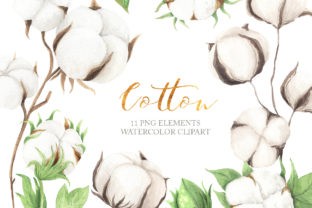
One of the primary hurdles in rustic and eco-style design is avoiding clichés while maintaining clarity. Many "nature" graphics appear overly stylized or cartoonish, which undermines the sophisticated, earthy tone many adults seek for mature projects like wedding invitations or business branding. Authentic Watercolor Cotton Clipart addresses this by retaining the subtle bleed and grain of traditional media. The cotton boll, with its fluffy texture and woody stem, is inherently symbolic of comfort, purity, and harvest, making it far more evocative than generic floral vectors.
Furthermore, technical limitations often stifle creativity. Low-resolution images result in pixelated prints, while flattened backgrounds make layering impossible. A professional-grade collection solves these friction points by providing individual illustrations on transparent backgrounds at 300dpi resolution. This specification is critical. It ensures that when you place a spring cotton flower over a textured paper background or a colored envelope liner, the integration looks seamless rather than pasted on. For users focused on print production, this high fidelity is non-negotiable for achieving crisp, gallery-worthy results.
Practical Applications for Wedding and Stationery Design
The most immediate application for this type of artwork is in the realm of wedding stationery. Couples seeking a rustic, bohemian, or Southern charm aesthetic often find that cotton florals strike the perfect balance between elegance and informality. With a set containing 11 individual illustrations, designers can create a modular layout system. Instead of using a single, static border, you can scatter individual bolls and leaves to frame text dynamically.
Consider the hierarchy of a wedding suite. You might use a larger, detailed cotton branch for the main invitation card to establish the theme, while utilizing smaller, isolated leaves for RSVP cards and detail inserts. This creates visual consistency across multiple pieces without repetition. The hand-painted nature of the graphics pairs exceptionally well with serif typography and uncoated paper stocks. When designing for print, remember that watercolor edges are soft; ensure your text has adequate breathing room so the legibility remains high against the organic forms of the clipart.
Expanding Beyond Paper: Textiles and Digital Branding
While stationery is a common use case, the versatility of Watercolor Cotton Clipart extends significantly into fabric design and digital media. For those involved in sewing, quilting, or surface pattern design, these high-resolution PNGs serve as excellent motifs for digital printing on fabric. Because the files are approximately 7 x 11 inches at 300dpi, they are large enough to be used as standalone focal points on tote bags, pillowcases, or baby blankets without losing detail.
In the digital sphere, bloggers and small business owners can leverage these assets to soften their web presence. A nature-inspired leaves set can be transformed into website headers, social media templates, or logo accents. For an eco-conscious brand selling sustainable goods, incorporating hand-painted cotton imagery reinforces the brand narrative visually. It signals to the consumer that the products are natural and thoughtfully sourced. When using these graphics digitally, consider adjusting the opacity or blending modes in your software to allow the watercolor texture to interact with your website’s background color, creating a more immersive user experience.
Technical Considerations for Optimal Results
To maximize the value of your clipart collection, it is important to understand file management and composition. Since this collection includes 11 individual PNG files with transparent backgrounds, organization is key. Create a dedicated asset library within your design software to quickly access specific elements. When composing your design, treat each illustration as a physical object. Rotate, flip, and overlap elements to create custom arrangements. Avoid placing items in perfect grids; nature is asymmetrical, and your design should reflect that organic flow.
Color management is another crucial consideration. Watercolor scans can sometimes shift in hue depending on your monitor calibration or printer profile. Always perform a test print before committing to a large batch of invitations or fabric. If you need to adjust colors to match a specific Pantone or fabric swatch, use hue/saturation adjustment layers rather than altering the original PNG file. This preserves the integrity of the master asset for future projects. Additionally, because these are raster images, avoid scaling them up beyond their native 7 x 11 inch size. Upscaling watercolor art often introduces artifacts that destroy the delicate brushwork. If a larger element is needed, compose multiple smaller illustrations together to build scale organically.
Tailoring the Approach to User Needs
Different creators will approach this Watercolor Cotton Clipart collection with varying objectives, and the workflow should adapt accordingly. Professional graphic designers may prioritize the modularity of the 11-piece set to build scalable branding systems for clients. They will likely focus on negative space and typographic integration, using the clipart as supporting texture rather than the primary focal point.
Conversely, DIY enthusiasts and hobbyists creating birth announcements or party tags may prefer a more illustrative approach. For these users, the goal is often emotional resonance and personalization. In this context, the hand-painted quality takes center stage. Users might combine the cotton flowers with handwritten script fonts and kraft paper textures to create a deeply personal artifact. The ease of use provided by pre-separated transparent PNGs allows non-designers to achieve professional-looking layering without needing advanced masking skills.
Ultimately, whether you are crafting a luxury wedding suite, designing a nursery textile, or building an eco-friendly brand identity, the success of the project lies in respecting the medium. By choosing high-quality, 300dpi resources and applying thoughtful composition techniques, you transform simple digital files into tangible expressions of nature and craftsmanship. This collection offers the raw materials; your creative intent provides the meaning. Through careful implementation, watercolor cotton graphics become more than just decoration—they become a vital tool for communicating authenticity in an increasingly digital world.